
CRANS-MONTANA MEMORIAL PARK
Paysage
de Mémoire
A Place to HealA landscape for remembrance, community and renewal.CONTEXT
A RESPONSE TO A COMMUNITY LIVING WITH LOSS
On 1 January, forty-one people lost their lives at the Constellation Bar in Crans-Montana. Many others were injured, and families, friends, first responders and the wider community continue to live with the effects of the tragedy.
This proposal is being developed by a group of artists, local voices, care professionals and collaborators. It asks whether a memorial landscape could offer a place for remembrance, healing and time together.
It is an early working study, not a finished design. It will continue to change through conversation, listening and the needs of those most affected.
PEOPLE INVOLVED
PEOPLE CURRENTLY CONTRIBUTING TO THE PROJECT
Jacob Cartwright
Sculptor, Tre Luci Studios
Flavia Rovallo
Co-founder, Tre Luci Studios
Sandro del Pistoia
Co-founder, Tre Luci Studios
Clara Martinez Castro
Artist and local voice
Ashley Maclead
Collaborator
Jennifer Murphy
Project Resources LLC
Michelle Fossati
Psychologist and psychotherapist
Daniela Danis
Psychologist and psychotherapist
Mariana Garcia Cano
Origen Patagonia Design
PAYSAGE DE MÉMOIRE · CRANS-MONTANA
WHY A MEMORIAL PARK?
The park is conceived as a place capable of holding the memory of the forty-one lives lost, while supporting the more than one hundred and fifteen people injured, their families, friends, and the wider community.
The forty-one stones remain at its heart, yet the landscape intentionally remains open to future memorial works, ceremonies, and artistic contributions.
PAYSAGE DE MÉMOIRE · CRANS-MONTANA
LISTENING TO THE LAND,
LISTENING TO THE COMMUNITY
This document does not present a finished proposal. It presents a process.
The ideas gathered here have emerged through walks, conversations, observations, and ongoing dialogue with artists, psychologists, local residents, and members of the Crans-Montana community.
The landscape itself has become a participant in the work.
Flowers suggested patterns of gathering. Mountains suggested permanence. Stone suggested memory. Families suggested testimony.
The project continues to evolve through listening.
The question is not: What should we build?
but: What kind of place does the community need?
CRANS-MONTANA MEMORIAL PARK
WHO THIS PLACE HOLDS
- the forty-one lives lost
- the more than one hundred and fifteen people injured
- families and loved ones
- friends and classmates
- first responders
- the people of Crans-Montana
- future generations who will inherit these memories
- This is a place for remembrance. It is also a place for life.
CRANS-MONTANA MEMORIAL PARK
LEARNING FROM THE LAND
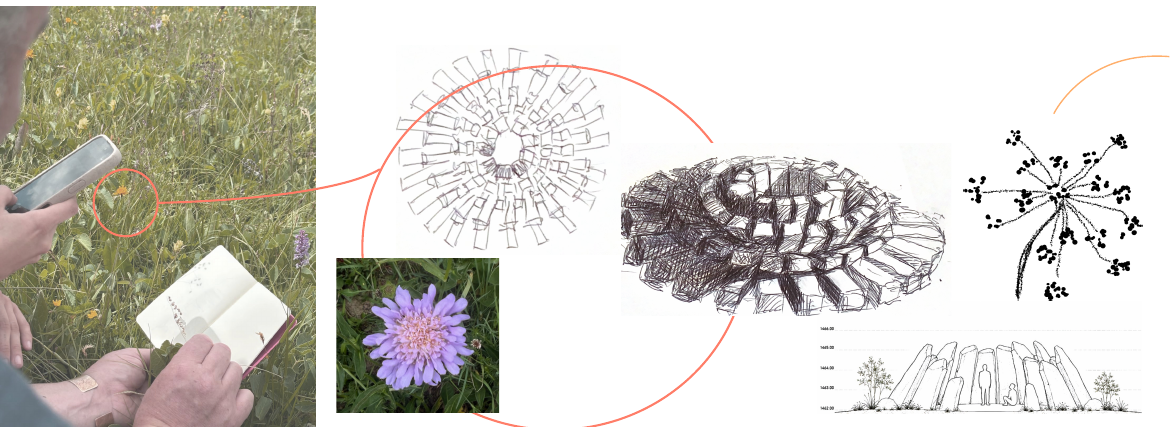
The earliest ideas emerged while walking through the alpine meadows surrounding Crans-Montana.
Patterns found in local flowers suggested forms of gathering: centres and petals, relationships and distances, spaces held collectively rather than individually.
The surrounding landscape offered the first points of reference: patterns of gathering, distance, shelter, and relation.
CRANS-MONTANA MEMORIAL PARK
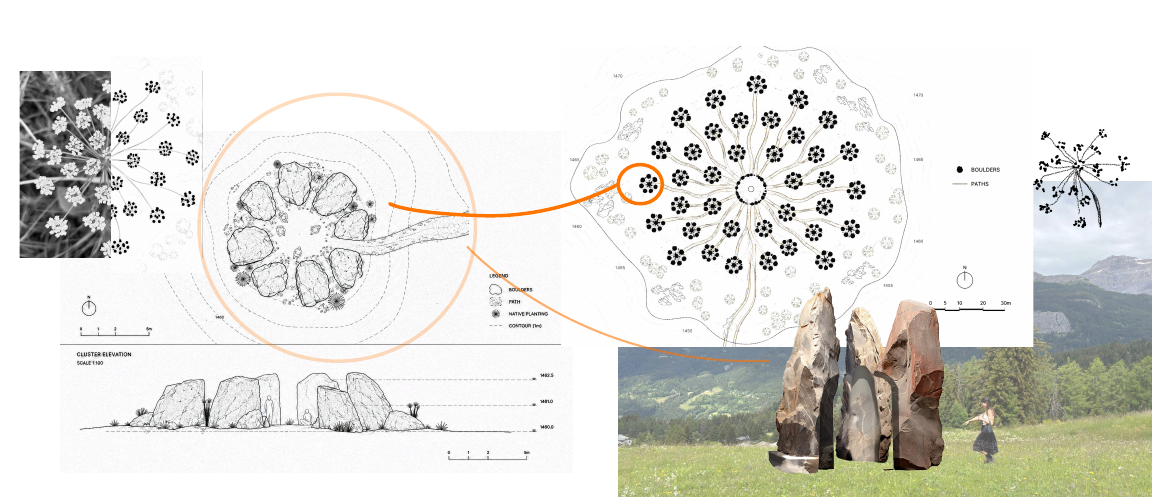
THE FORTY-ONE STONES
At the heart of the park stands a gathering of forty-one stones, each honouring one of the lives lost.
Together they create places: places to speak, places to remain silent, places to sit and be held, places protected from view, places open to the mountains.
The stones are not only objects to be seen. They are spaces to be entered.
PAYSAGE DE MÉMOIRE · CRANS-MONTANA
THE EVOLUTION OF THE IDEA
Forest
A first image of shelter, growth and shared ground.
Flowers
Local flowers suggested centres, petals and relationships.
Patterns
Repeated forms became a way to think about distance and relation.
Gathering
A place formed around being together, without asking everyone to gather in the same way.
Shelter
Spaces to sit, speak, remain silent or step aside.
Constellations
A way of considering distinct lives held within a larger field.
Fallen stones
Stone as memory, weight and a material belonging to the mountain.
Healing landscape
A landscape that can support reflection and return over time.
Community listening
The project changes through the people and knowledge around it.
Open questions
What is still unknown is part of the work.
Nothing was discarded. Each stage informed the next: the need to gather, to shelter, to sit, and to be held.
The forty-one stones remain central, yet the park is not closed by them. It remains capable of holding future works, ceremonies, and forms of remembrance that may emerge through time.
PAYSAGE DE MÉMOIRE · CRANS-MONTANA
A LANDSCAPE IN FORMATION
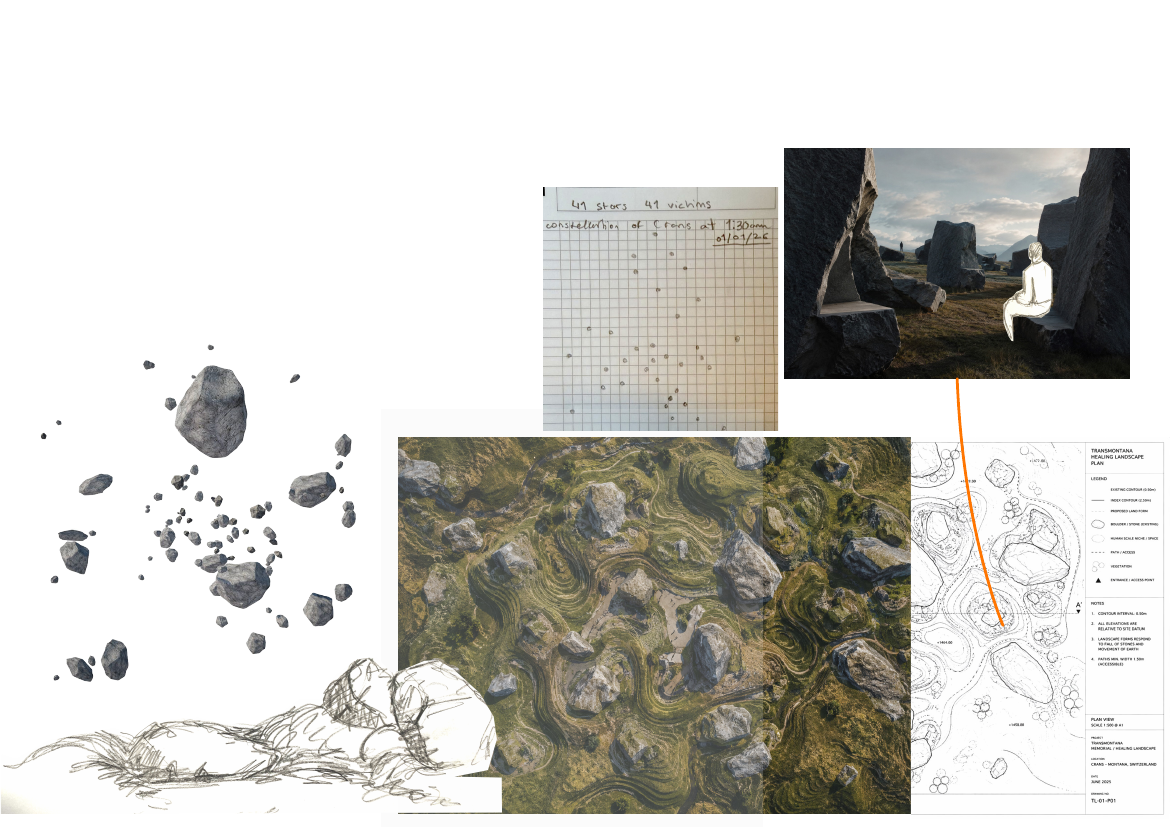
Some studies draw inspiration from the constellation visible above Crans-Montana on the night of the tragedy.
Others imagine stones arriving together, their collective weight altering the landscape itself.
Certain events reshape the ground upon which communities stand. The question is not how to return to what existed before - but how new forms of gathering and life may emerge afterwards.
CRANS-MONTANA MEMORIAL PARK
A PLACE TO HEAL
The park is intended not only as a place of memory, but as a landscape that can support reflection, gathering, and remembrance over time.
CRANS-MONTANA MEMORIAL PARK
A PLACE APART
The memorial park is imagined not as an object within the town, but as a landscape slightly removed from everyday life.
A place that can be chosen.
A place that offers privacy within community.
A place to walk. To sit. To remember. To remain silent. To look toward the mountains. To return to over generations.
PAYSAGE DE MÉMOIRE · CRANS-MONTANA
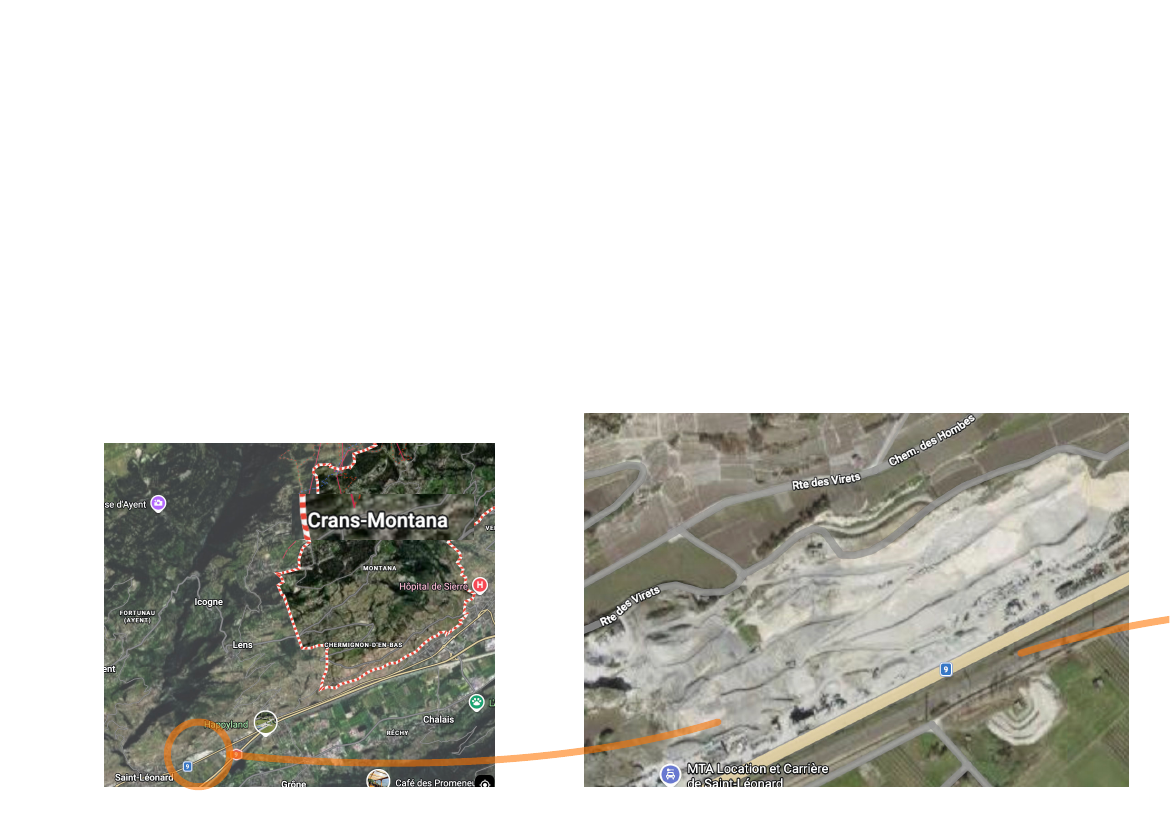
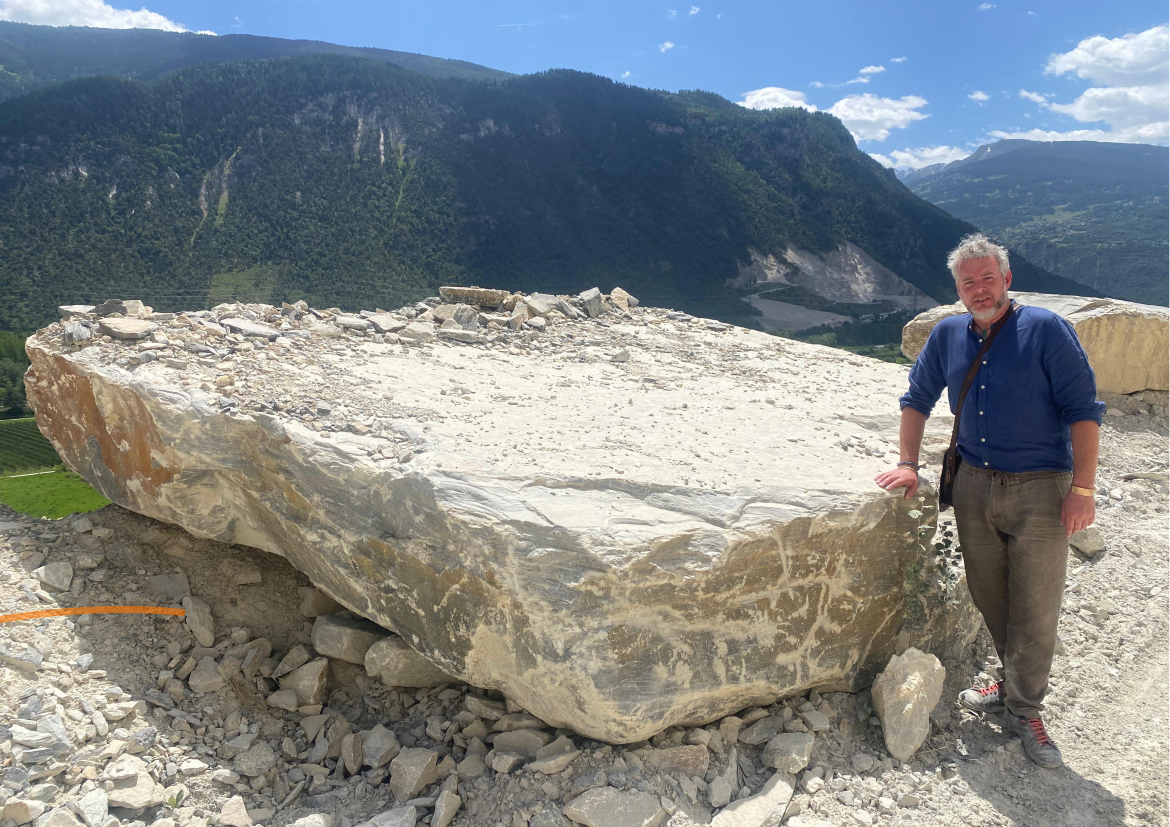
STONE FROM THE MOUNTAIN
The intention is simple:
that the memorial park should arise from the same landscape that has shaped Crans-Montana itself.
The stones belong to the mountain. They are not imported.
The land remembers through its own materials.
PAYSAGE DE MÉMOIRE · CRANS-MONTANA
THE JOURNEY OF THE STONE
The movement of the stones from mountain to resting place may become more than construction.
It may become a shared gesture, shaped by those who wish to take part.
How families and community members may wish to participate remains an open question. These rituals cannot be designed in advance. They must emerge through listening.
A mother may wish to honour her child. The landscape should make space for that possibility.
CRANS-MONTANA MEMORIAL PARK
OPEN QUESTIONS
- How might families accompany the stones?
- How might testimony be given?
- What forms of gathering should emerge?
- How might future generations inhabit this place?
- What additional memorial works might become part of the park over time?